Import fields
Import data into Pipedrive with a spreadsheet to create or update items in bulk. This is useful when you’re migrating data from another system or making large updates across your account.
You can import people, organizations, leads, deals, projects, activities, notes, products and activities.
During import, each column in your spreadsheet is mapped to a Pipedrive field. Understanding which fields are available helps you prepare your data and avoid errors.
What fields are available
In Pipedrive, your data is organized into three types of fields:
| Field type | What it means | Example |
|---|---|---|
| Default fields | Built-in fields available in Pipedrive | Name, deal value, owner |
| System fields | System-generated information | Deal status, won time, system ID |
| Custom fields | Fields created by you or your team | Industry, internal classification |
While all these fields exist in Pipedrive, not all of them can be mapped during import. Most default and custom fields are available, while some system fields are restricted or automatically set.
To view and manage your data fields, open the account menu in the top right corner and go to Personal preferences > Data fields.
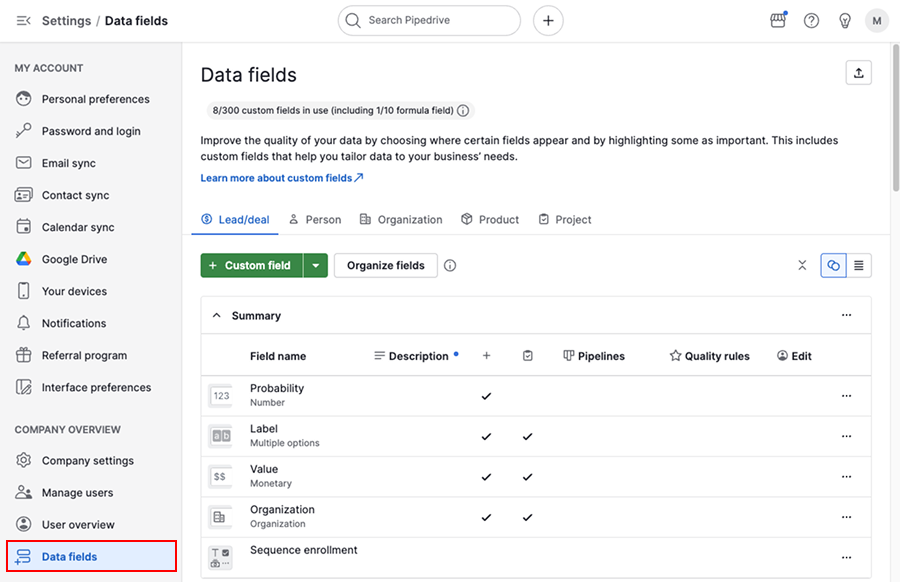
There, you can see available fields for leads, deals, organizations, people, products and projects.
If you have data you want to import but don’t see a matching field, you can create a custom field before starting your import. This helps you map your data correctly and keep your account organized.
Formula fields
Formula fields are a type of custom field that calculates values based on other numerical or monetary fields.
For example, you can create a field that calculates a 5% commission from the deal value.
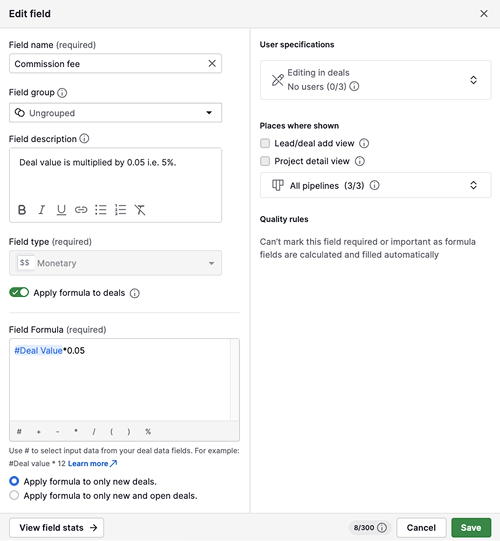
When your import includes a deal value, the commission is automatically calculated after the import completes.
What fields you can import
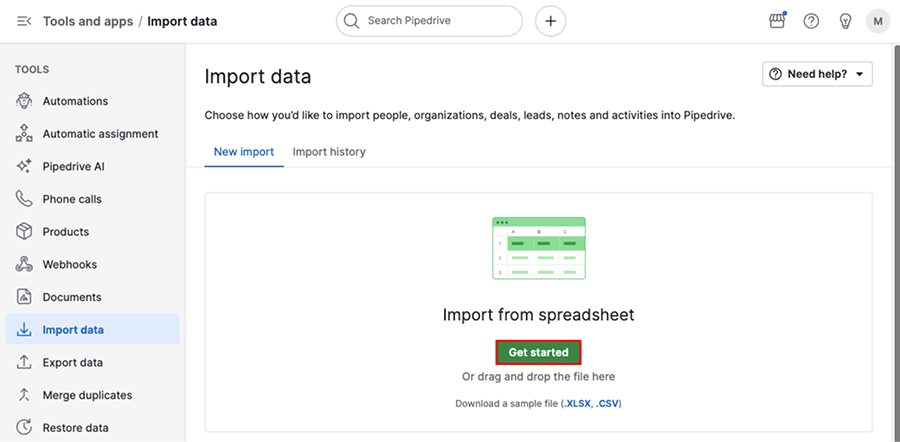
To start importing data, go to account menu > Tools and apps > Import data and click “Get started”.
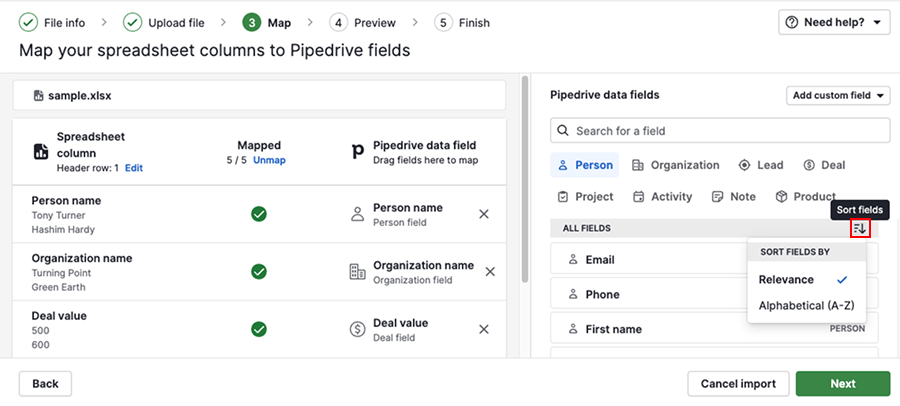
Once you upload your file, you’ll move to the mapping screen. This is where you match your spreadsheet columns with Pipedrive fields.
Fields are grouped by item type, such as person, organization or deal.
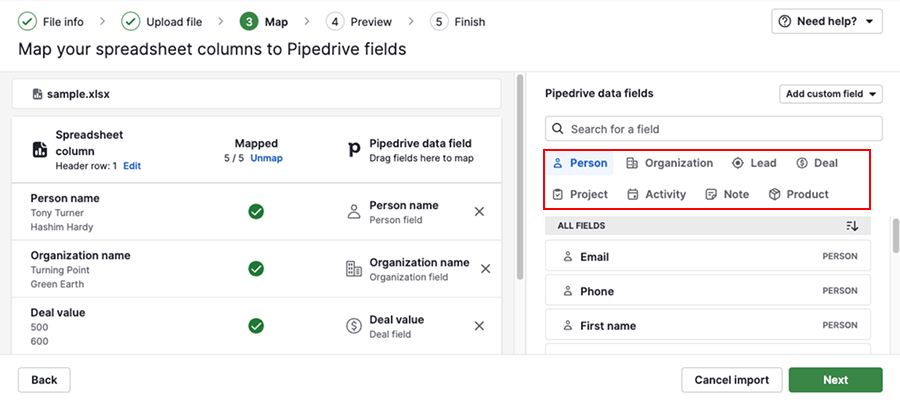
By default, they’re sorted by relevance, but you can switch to alphabetical order using the “Sort fields” option.
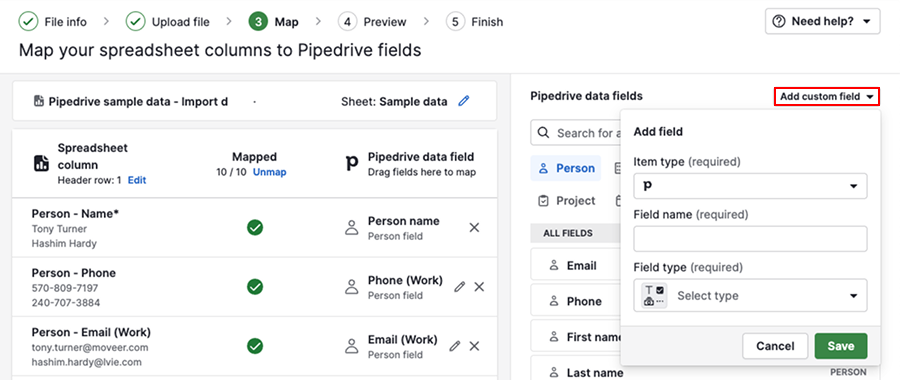
If you’re missing a field during mapping, you can create a new custom field directly from this screen without restarting the import.
Fields available by item type
The table below gives a general overview of the most common fields you can map during import.
| Item | What it’s used for | Common fields |
|---|---|---|
| Person | Individual contact data | Name, phone, email, label, marketing status |
| Organization | Company-level data | Name, address, website, LinkedIn profile, industry, annual revenue, number of employees |
| Lead and deal | Sales opportunity tracking | Title, value, currency, expected close date, label, stage (deals), probability (deals), status |
| Project | Project planning and delivery | Project title, phase (board), start date, end date, status, description, label |
| Activity | Action tracking | Activity type, note, due time, duration, done status |
| Note | Additional context and details | Note content |
| Product | Product catalog and pricing | Name, price, product code, category, description, unit, currency, tax, billing frequency |
All items also include fields such as owner, creation date and Pipedrive System ID. These are available during import regardless of the item type.
Some system fields aren’t available for mapping or are set automatically during import. For example, certain timestamps or system-generated values can’t be edited.
Manage existing values
When updating multiple option fields, you can choose whether new values are added to the existing selection or replace it entirely.
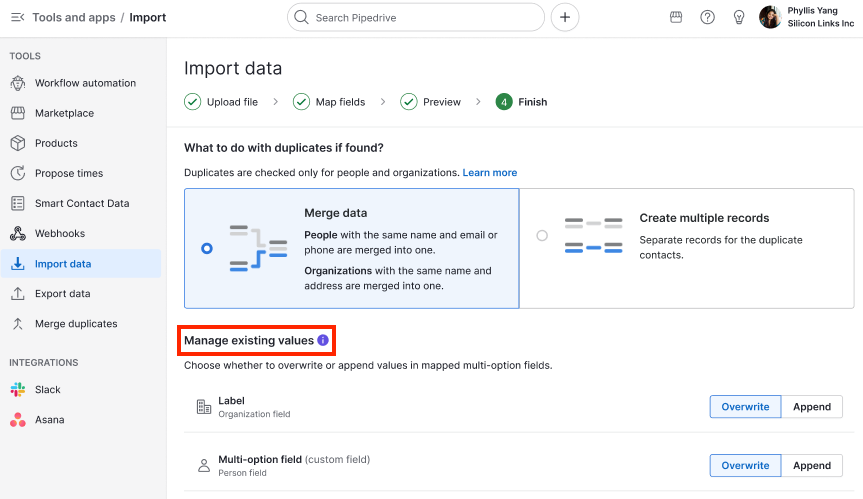
Select ”Overwrite” to remove the existing values and replace them with your new selection.

Select ”Append” to keep the current values and add the new ones alongside them.

Was this article helpful?
Yes
No