Projects: templates
Instead of recreating the same tasks and timelines for every project, use project templates to standardize repeatable processes.
Templates help you quickly set up recurring work, such as client onboarding or service delivery, with structure and timelines already in place.
Add project templates
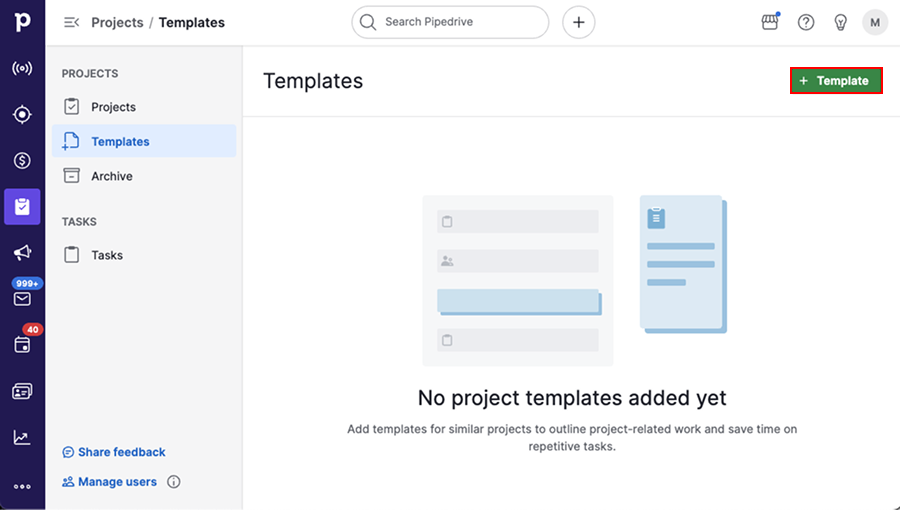
To create a template, go to Projects > Templates and click “+ Template”.
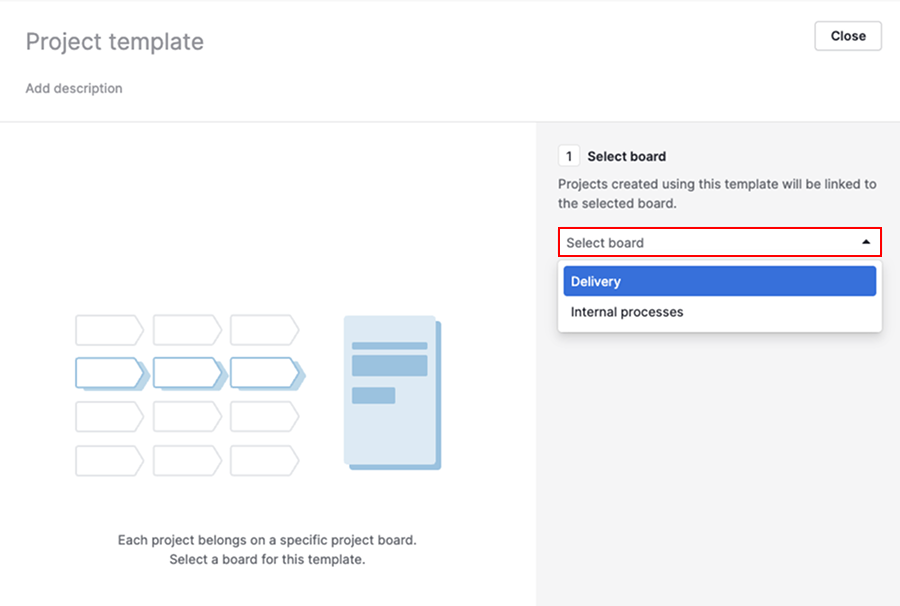
First, select the board where projects created from this template will live, then click “Continue”.
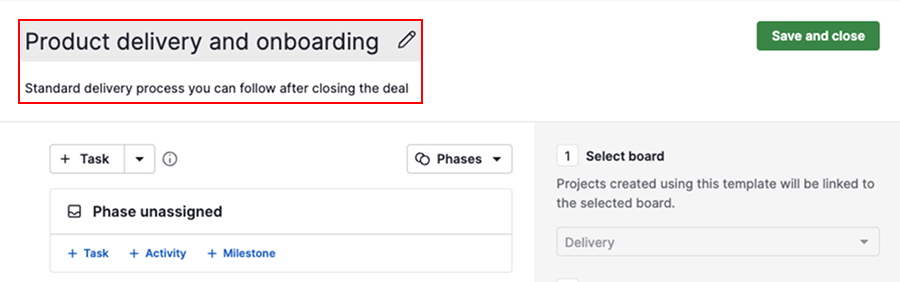
Add a clear title and description so your team knows when to use it.
Set up your project plan
Inside the template editor, recreate the work your team completes in every project.
Add tasks, activities and milestones that you regularly create manually.
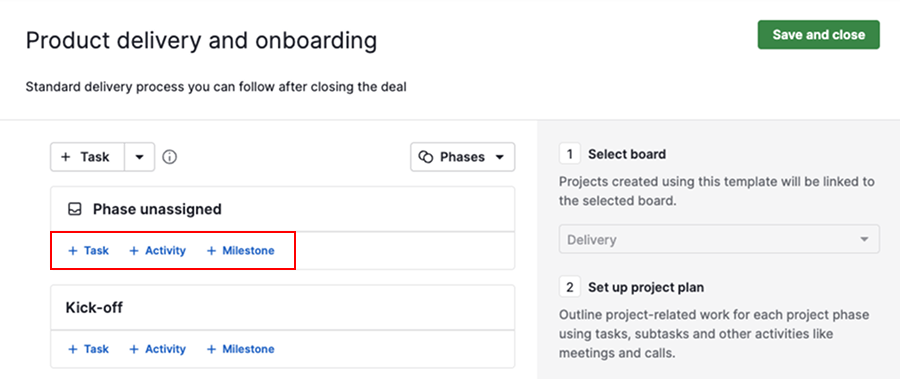
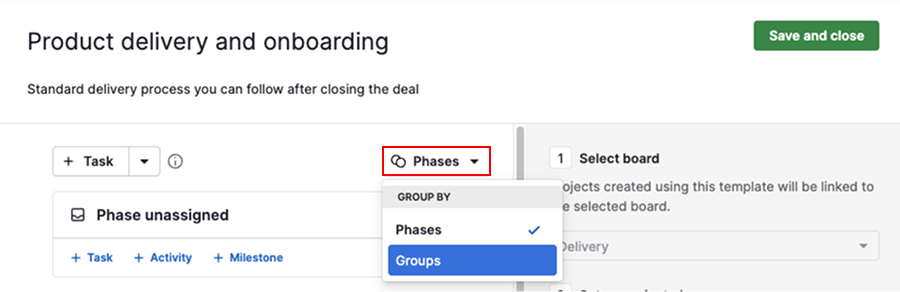
You can organize the same work items in different ways depending on how structured your process is. Assign them to specific phases, group them using groups or keep them unassigned.
To change how work items are organized, click “Phases” and select “Groups”.
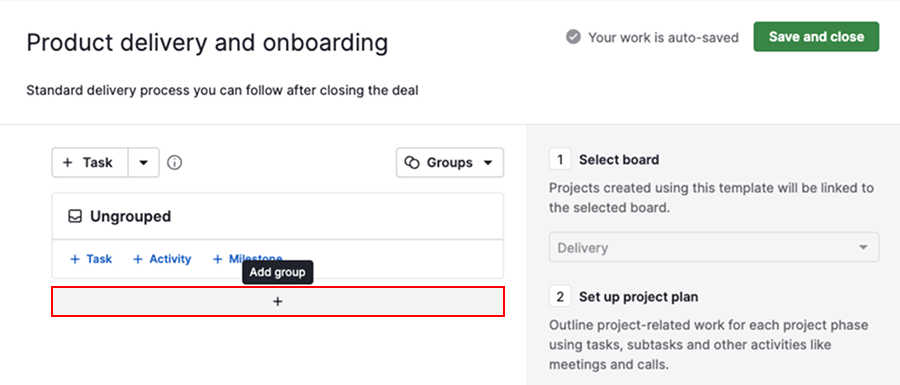
Then click “+” to create a group and assign work items to it.
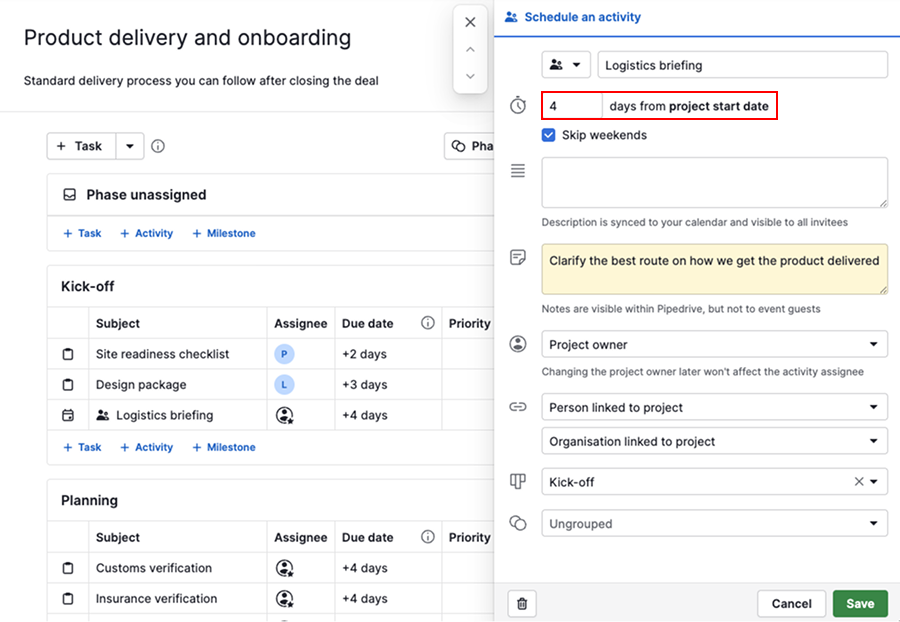
When adding work items, set relative due dates based on the project’s start date so that every project created from the template follows the same timeline.
Define task dependencies
Dependencies help your team understand the correct order of work and avoid starting tasks too early.
Open a task or milestone you've added, then go to the dependencies tab and click “Add dependency".
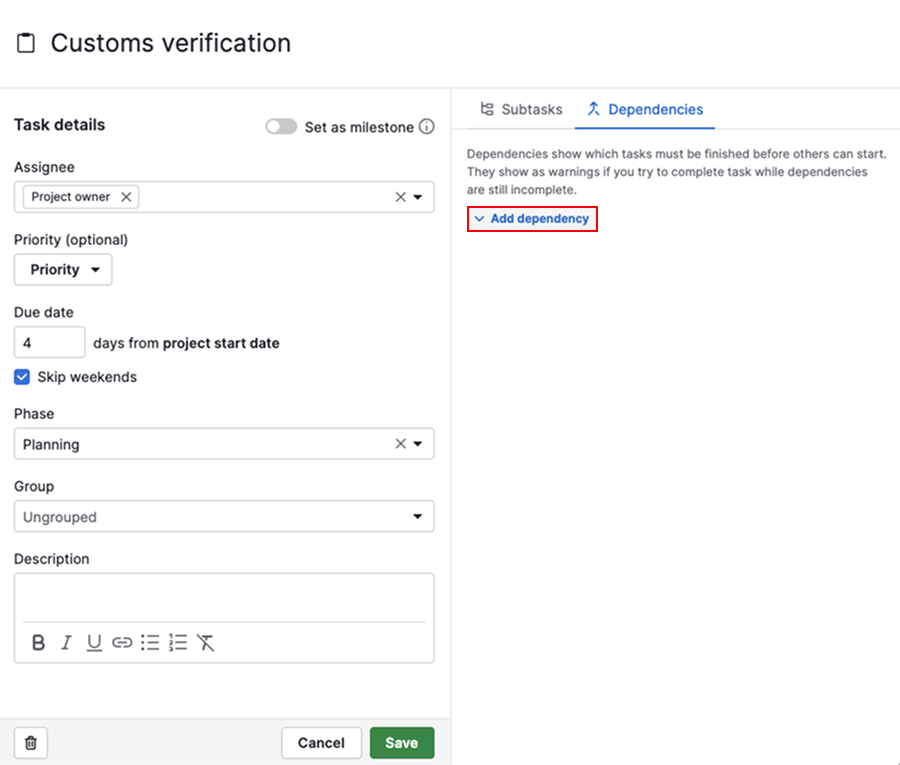
Select another task and define the relationship:
- Blocking – the current task blocks the selected task
- Waiting on – the selected task must be completed before the current task
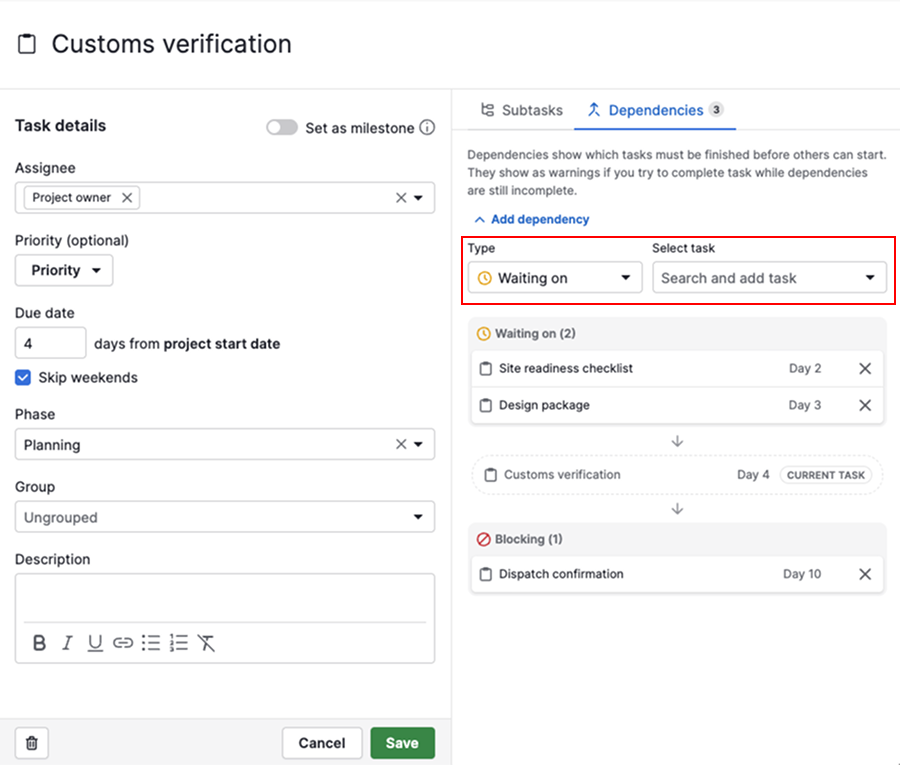
When your template is ready, click “Save and close”.
Convert a project into a template
If you already have a project with a structure you want to reuse, you can convert it into a template.
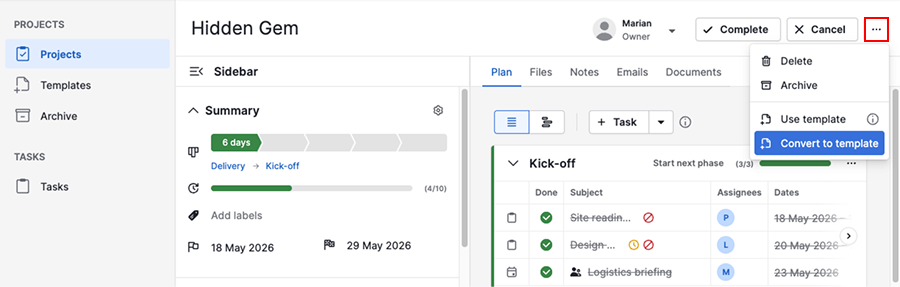
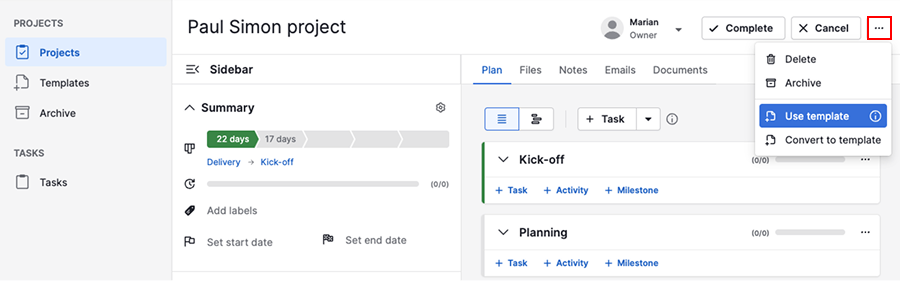
Open the project, click “…” in the top-right corner and select “Convert to template”.
Then choose whether to keep or delete the original project.
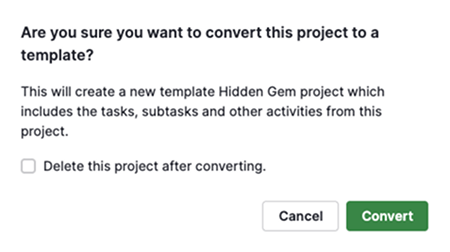
The new template keeps your tasks, activities and milestones in the same phases, including their relative due dates.
Create projects from a template
Once your template is ready, you can use it to create projects either manually or automatically.
Add new projects
Go to Projects > Templates and click “Use” on a template.
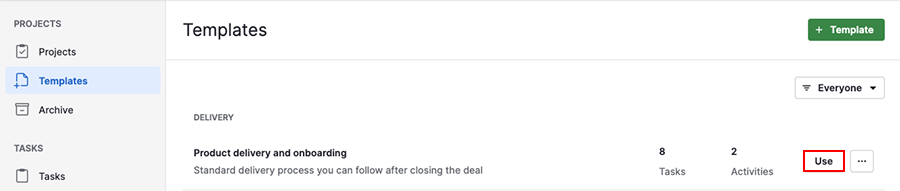
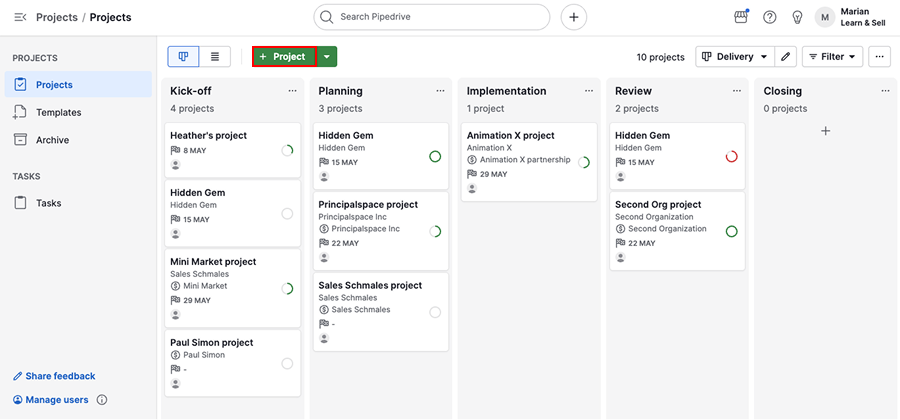
You can also go to Projects, click “+ Project” and select a template during setup.
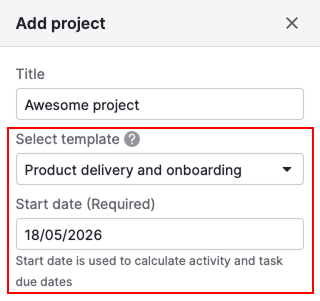
After selecting a template, add your project details and define a start date. Tasks, activities and milestones from the template are scheduled relative to this date.
Apply templates to existing projects
You can also apply a template to an existing project within the same board.
Open the project detail view, click “…” in the top-right corner and select “Use template.”
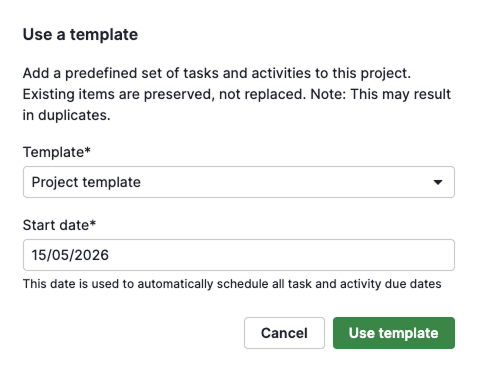
Select a template and define a start date. This date is only used to calculate relative due dates for tasks, activities and milestones. It won’t change the project’s existing start date.
Any existing work items already in the project remain in their current phases.
Automate project creation
You can also use templates to automate project creation.
When building an automation with a project action, click “Add fields”, then select a template and define a start date.
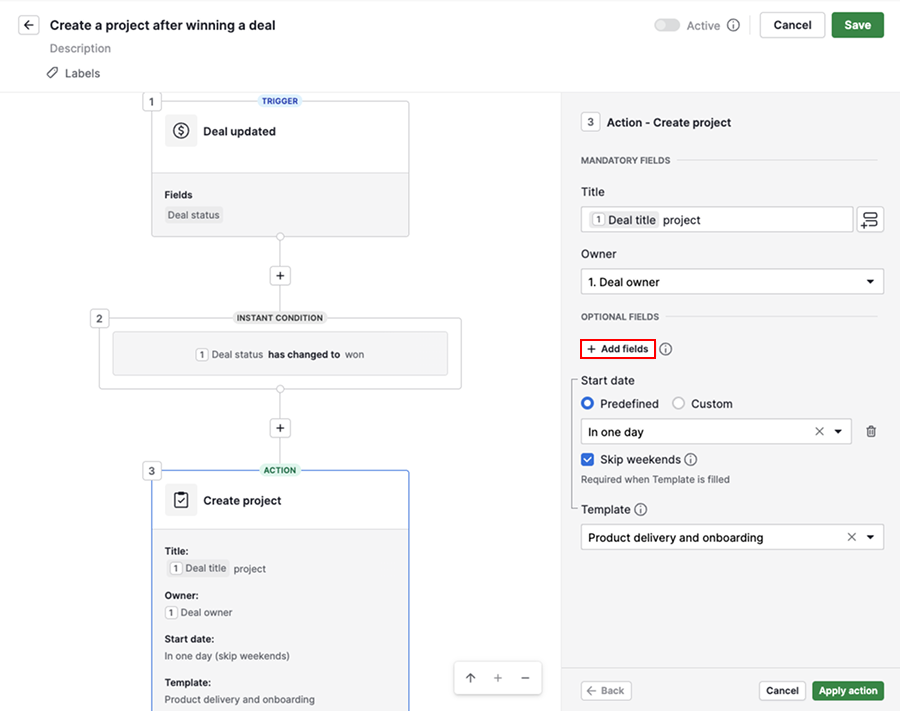
Once set up, a new project is created automatically whenever the automation is triggered, for example, when a deal is won.
Manage and update your templates
As your processes evolve, your templates should evolve with them.
In Projects > Templates, use the “…” menu to edit, duplicate or delete templates.
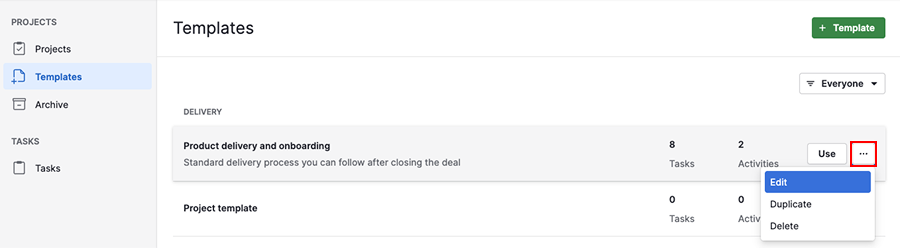
Keeping templates up to date ensures every new project reflects how your team currently works.
Was this article helpful?
Yes
No