Projects by Pipedrive
The project management software in Pipedrive helps you manage the work that happens after a deal is won.
You can use it to organize delivery, onboarding, implementation or any other post-sale workflow in one place. Instead of relying on external tools or workarounds, your team can plan, track and collaborate directly inside Pipedrive.
Understand how projects work
Projects in Pipedrive are designed to help you move from planning to execution in a structured way.
At a high level, projects are organized on boards, and each board contains phases that represent steps in your process.
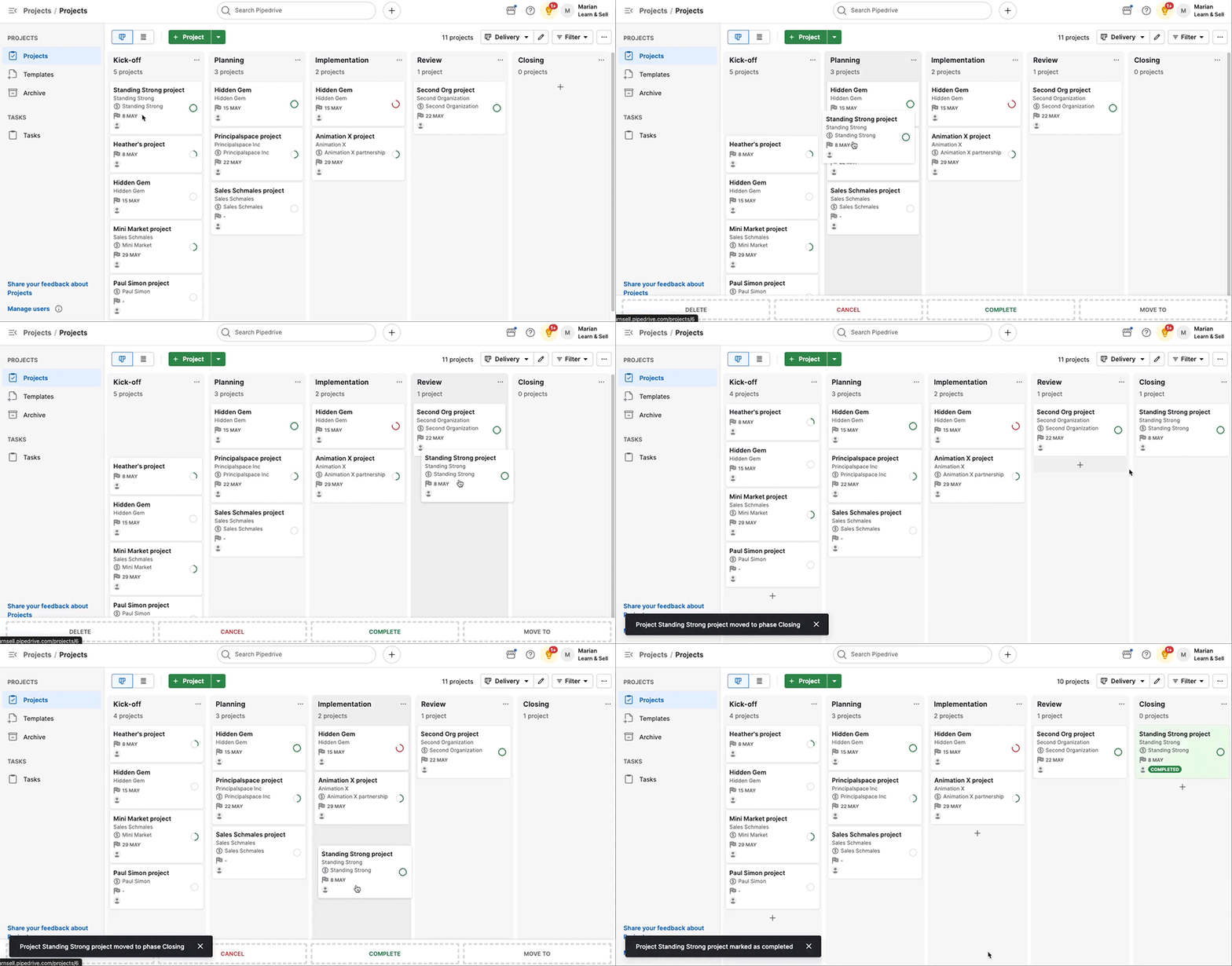
Just like deals move through stages in the pipeline view, projects move through phases on your board view.
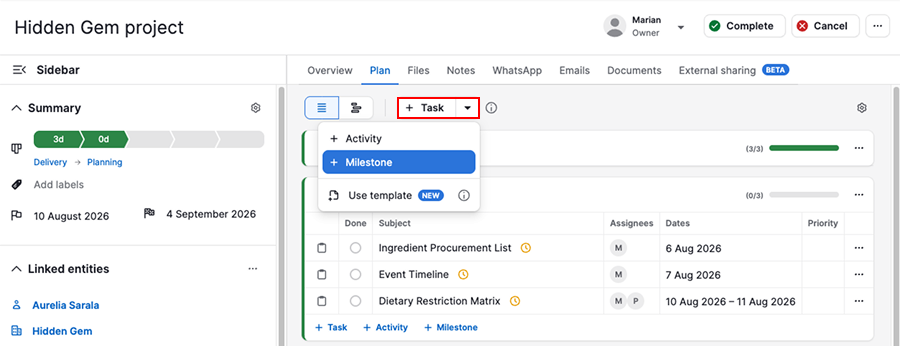
Inside each project, you can plan and track your work with tasks, subtasks, activities and milestones.
Projects also keep your work connected. You can link them to deals, a contact and an organization, so your team has full context when moving from sales to delivery.
Design your project board
If your team manages different types of work, you can create multiple boards to keep projects organized by process, team or use case.
Open the Projects tab, click the board dropdown and select “+ New board”.
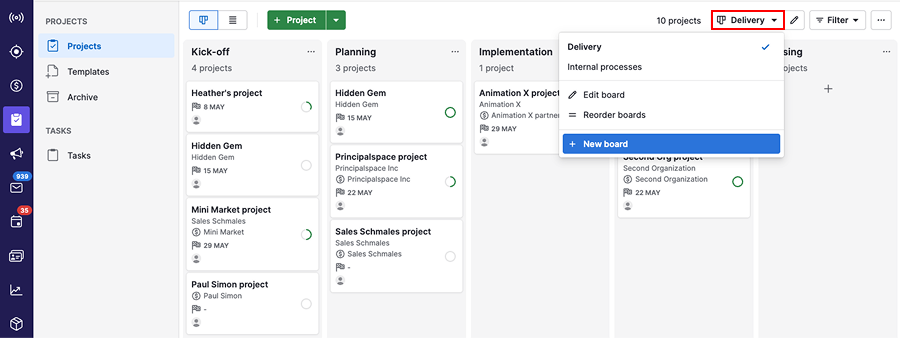
From there, you can add, edit, delete or reorder phases, just like when designing your pipeline.
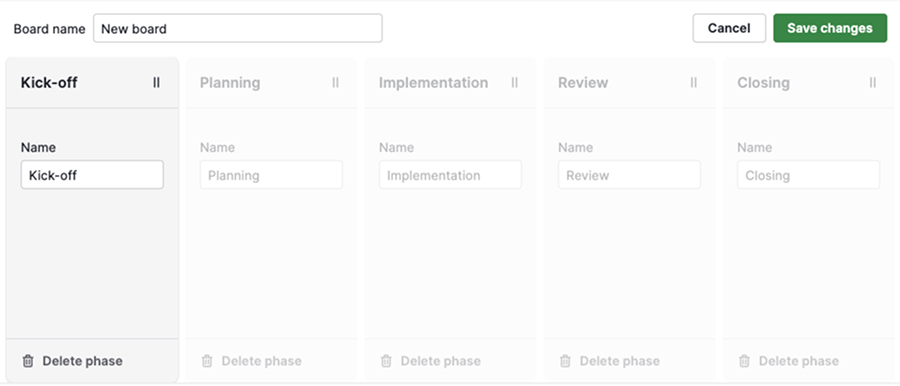
Once ready, click “Save changes”. To update your board later, click the pencil icon next to the board name.
Add projects
You can create a project in different ways, depending on how your team starts planning and delivery.
After a deal is won
Use this option when your delivery process starts after the sale is complete.
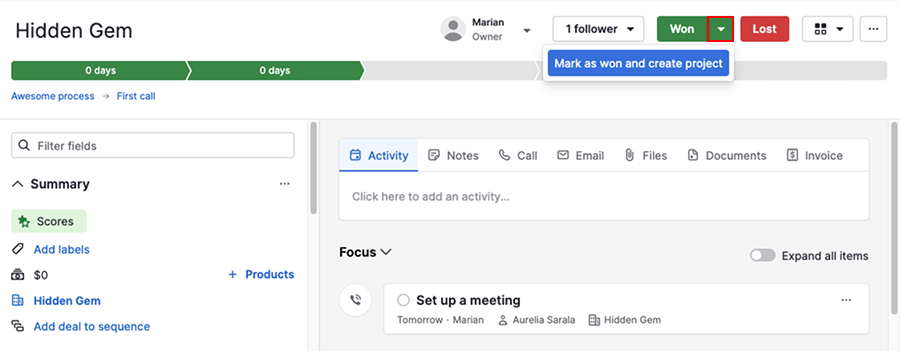
Go to the deal detail view, open the won deal dropdown and select “Mark as won and create a project”.
While a deal is still open
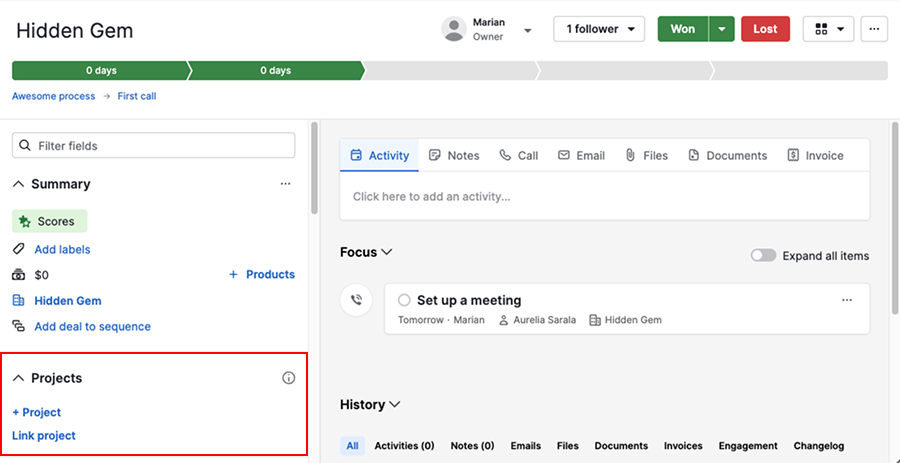
If work begins before the deal closes, use the projects panel in the sidebar of your deal detail view to create or link a project.
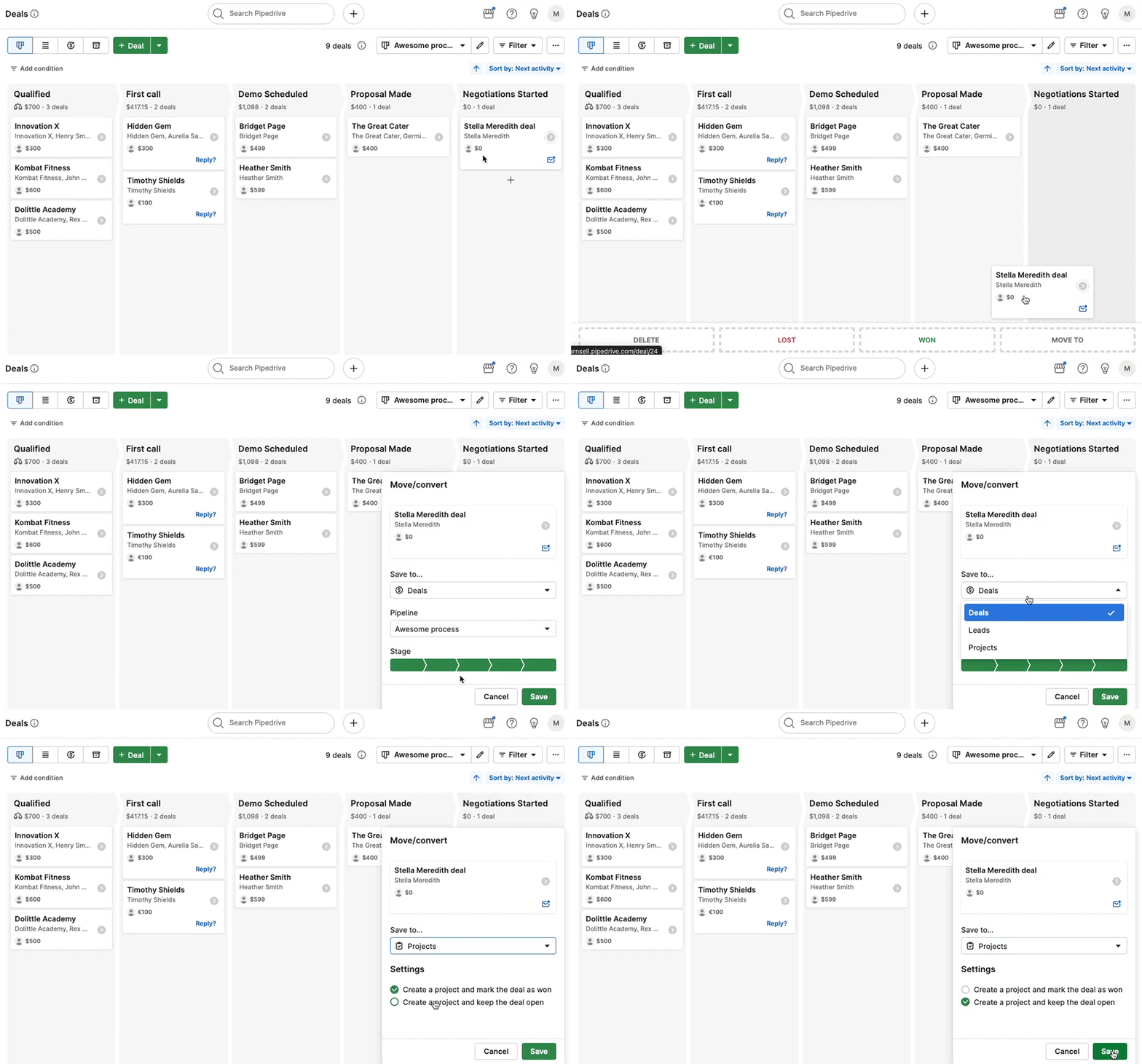
In the pipeline view, you can also drag a deal to the move/convert option, click “Save to...” and select “Projects”. Then choose whether to keep the deal open or mark it as won.
From scratch
If your project isn’t linked to a deal, go to the Projects tab and click “+ Project”.
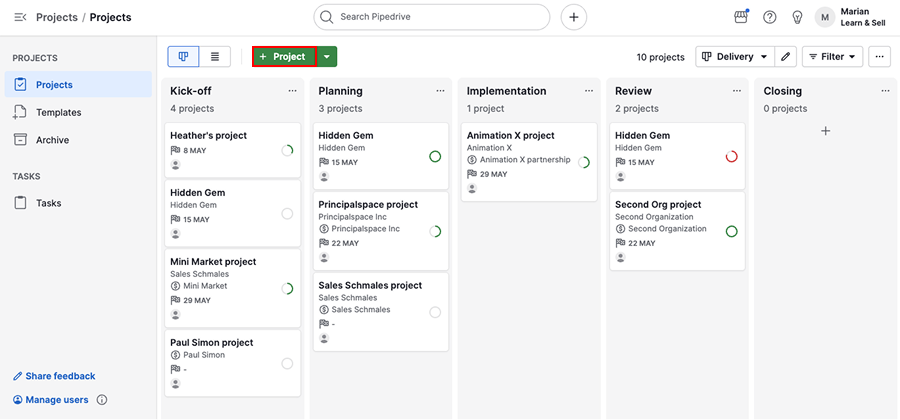
You can define key details such as the project title, dates, board, phase, owner and linked items.
If your projects follow a similar structure, use project templates to standardize your process and save time when creating new projects.
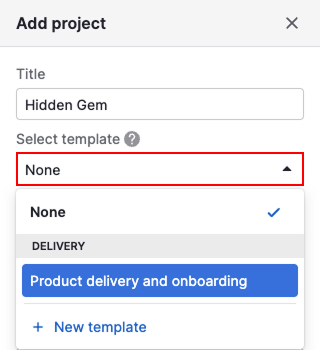
Import projects from a spreadsheet
If you’re migrating existing project data into Pipedrive or need to create several projects at once, you can import projects in bulk instead of adding them one by one.
Go to account menu > Tools and apps > Import data, then choose to import projects from a spreadsheet. For a full walkthrough, see importing data into Pipedrive with spreadsheets.
View and manage your projects
After adding projects, you can control how they’re displayed and managed.
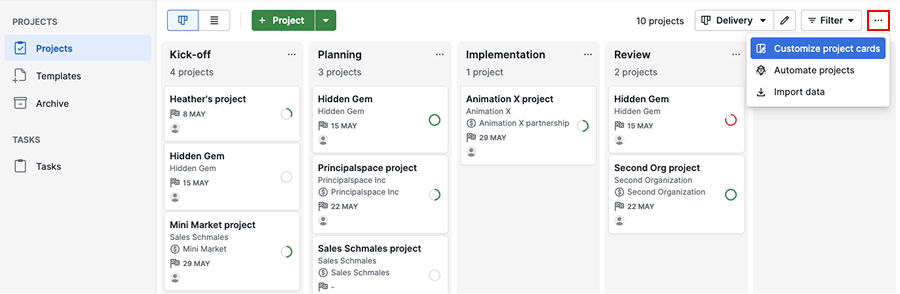
To show more information on each project card, click “...” > Customize project cards and select the fields you want to display.
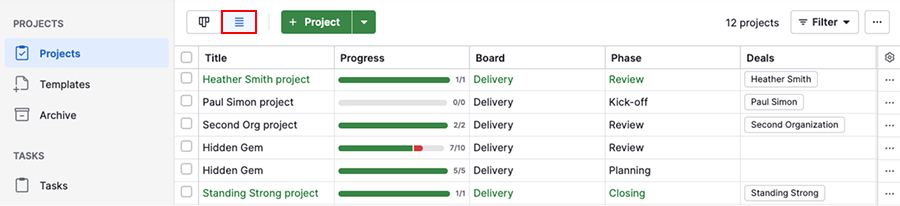
To see all projects in one place with more details, switch to the list view.
When working with multiple projects, use filters to focus on a specific group, then apply bulk editing to update shared values.
For example, you can filter projects by owner, board or status, then update these fields across multiple projects at once. This helps you save time and keep your data consistent.
Work inside a project
To manage your project and track progress in one place, click a project to open its project detail view. Here, you can also view and edit default and custom fields specific to your business,
Get a project overview
Open the overview tab to see the most important information about a project as soon as you open it.
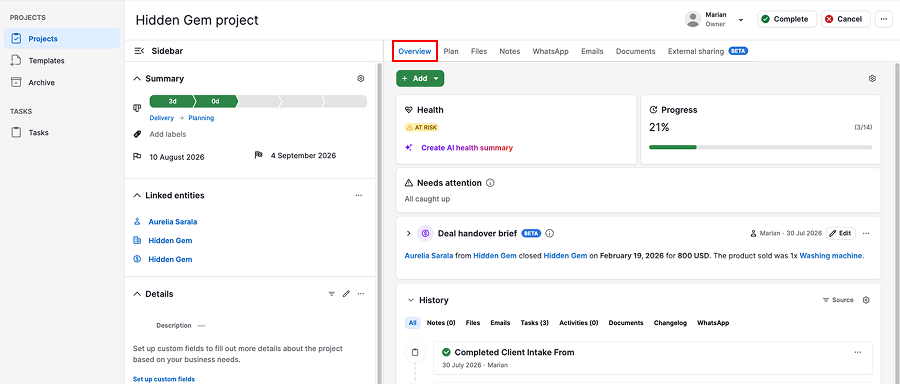
| Card | What it shows |
|---|---|
| Health | The project’s current status. Set it manually or click “Create AI health summary” to generate a suggested status, overview and recommendations based on your project data. |
| Progress | The percentage of the work items you’ve marked as done, so you can see delivery progress at a glance |
| Needs attention | Tasks, activities, and milestones that are due today or have been overdue for up to 30 days |
| Deal handover brief | For projects linked to a deal, a summary of key deal details, such as linked activities and products. Click “Generate brief” to create one. |
| History | Everything that happened in the project, including notes, files, emails, tasks, activities and a changelog of field and status changes. Use the tabs above the list to filter by type. |
Keep context and collaborate
Inside a project, you can:
- Upload and store files
- Leave notes and mention teammates to loop them in
- Send and receive WhatsApp messages
- Send emails directly within the project
- Add documents through Smart Docs, such as proposals or contracts
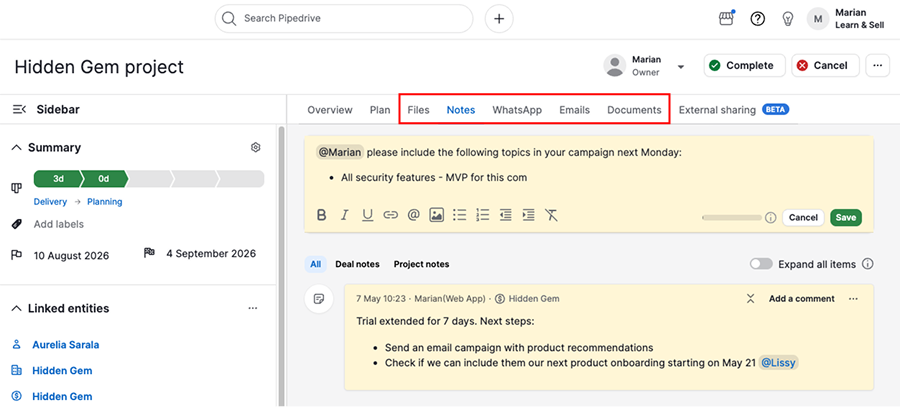
If a project is linked to a deal, related files, notes and emails are automatically included, so your team can stay aligned without switching between views.
Plan and assign work
You can plan work inside the project using the following project items:
- Tasks for work that need to be done
- Subtasks to break tasks into smaller steps
- Milestones for key progress points
- Activities for scheduled events such as calls or meetings
Open the project’s plan tab to view these work items either by:
- Phases – reflect the main steps of your process
- Groups – create custom groups to organize work items by team, responsibility or category instead
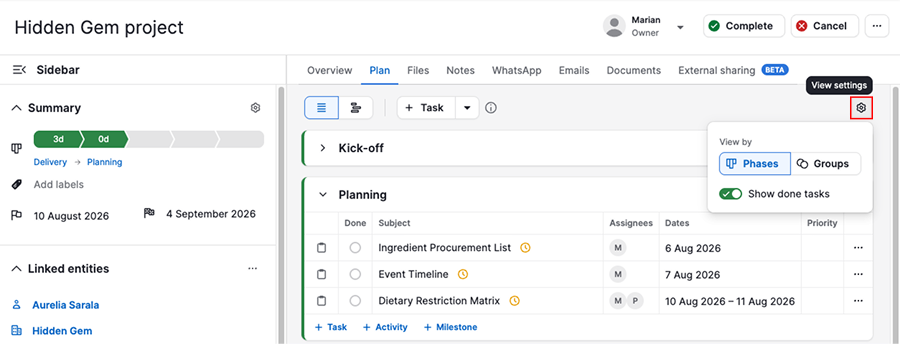
Assign work to team members, add notes and set priorities to keep responsibilities and timelines clear. As items are completed, mark them as done. The progress bar updates automatically to reflect overall project progress.
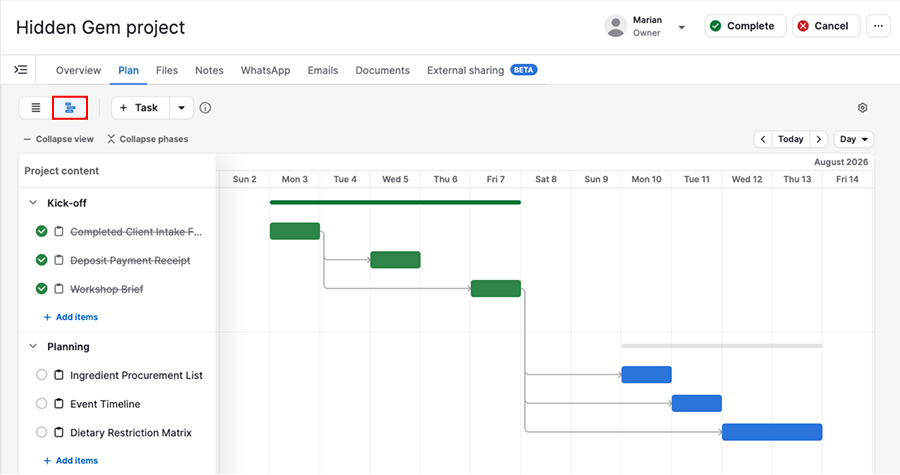
To visualize your work in a timeline, switch to Gantt view to plan dates and set dependencies between tasks. You can also update several items at once. Learn more in Projects: manage work items efficiently.
Share progress with external stakeholders
Use the external sharing tab to generate an AI report that summarizes the project's status, overview, highlights, next steps and risks.
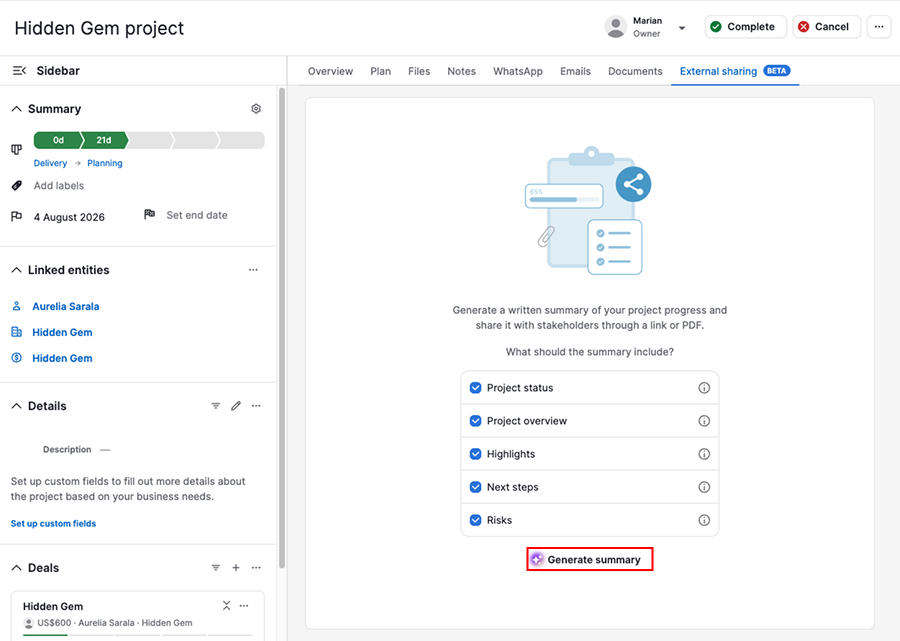
You can then share it as a view-only link or a PDF, so clients or other stakeholders outside your Pipedrive account are informed on how your project is going.
Automate projects
With automations, you can reduce manual work and keep your projects moving without constant updates.
For example, in a client onboarding project, when a task like “Send onboarding documents” is marked as done, you can automatically trigger the next steps.
Instead of manually updating the project, the automation can:
- Update the project phase to reflect progress
- Create a new task, such as “Kickoff call”
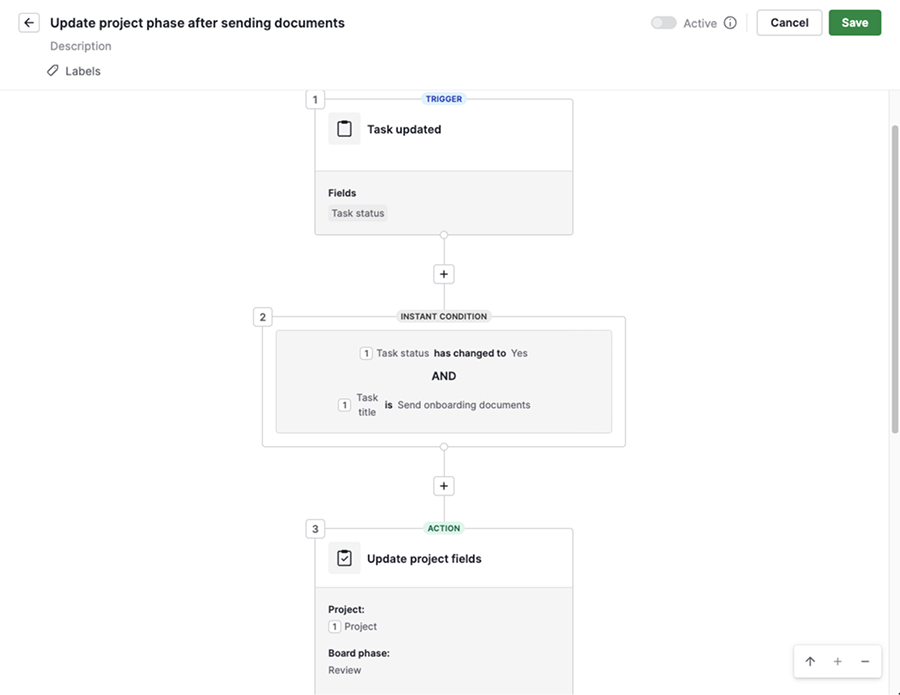
Automating your project lets it move forward as work is completed.
Measure performance and delivery time
Use the project performance report in Insights to analyze how your projects are progressing over time. This report helps you review trends, evaluate delivery outcomes or understand team performance across projects.
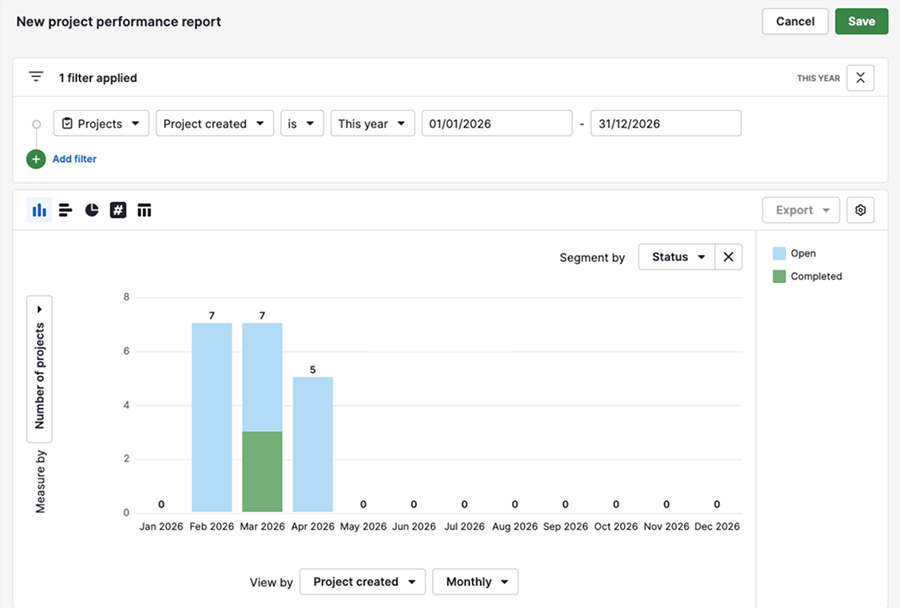
To see how long delivery actually takes, use the project duration report. It shows how much time projects spend in each phase, helping you spot bottlenecks and improve delivery speed.
Use Projects on mobile
Manage your projects on the go with the Pipedrive mobile app. You can view project progress, update tasks and activities, add notes, and create new projects without opening the web app.
Was this article helpful?
Yes
No